
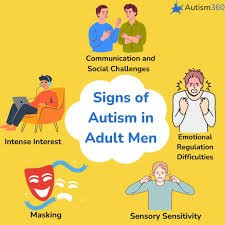
Navigating the world as an adult can be complex, and for many, understanding themselves better begins with recognizing neurodivergent traits that were previously undiagnosed. A growing number of individuals are discovering they are **autism adults**, leading to a clearer understanding of their experiences and a path towards living more authentically. This journey often involves dispelling outdated notions and embracing a strengths-based perspective on neurodiversity.
Understanding Autism in Adults: Beyond Childhood Stereotypes
Autism Spectrum Disorder (ASD) is a lifelong neurodevelopmental condition, meaning it’s present from birth and affects individuals throughout their lives, including **autism adults**. Historically, autism was primarily associated with children, and the diagnostic criteria were heavily biased towards how it presented in young boys. This narrow understanding meant that many individuals, especially women and those with less overt presentations, went undiagnosed for decades.
The increasing awareness of neurodiversity has shed light on how autism manifests differently in adults. Many adults seek a diagnosis after years of feeling “different,” struggling with social interactions, or experiencing anxiety and depression without understanding the underlying cause. A late diagnosis can be a profound moment of clarity, allowing individuals to reframe their life experiences and develop coping strategies tailored to their unique neurotype.
It’s crucial to move past the idea that autism is a “childhood disease” that people grow out of. Instead, we recognize it as a fundamental difference in how a person perceives the world, processes information, and interacts with others. This perspective shifts the focus from “fixing” autism to understanding and supporting the individual’s unique strengths and challenges.
Recognizing the Signs: How Autism Presents in Adults
Identifying autism in adults can be challenging because many autistic individuals learn to “mask” or camouflage their traits to fit in, often at a significant personal cost. However, certain patterns and characteristics tend to emerge, which can be indicators for **autism adults**. These signs often impact social interactions, communication, sensory experiences, and routines.
Social Communication Differences
One of the core areas where autism manifests is in social communication. This doesn’t mean a lack of desire for connection, but rather a difference in how social cues are understood and expressed.
– Difficulty understanding non-verbal cues: Autistic adults may struggle to interpret body language, facial expressions, or tone of voice, leading to misunderstandings.
– Challenges with reciprocal conversation: Initiating or maintaining back-and-forth conversations can be difficult. There might be a tendency to talk extensively about special interests without noticing if the other person is engaged.
– Literal interpretation of language: Sarcasm, idioms, and metaphors can be confusing, as autistic individuals often interpret language literally.
– Difficulty with small talk: Engaging in superficial conversations can feel pointless or exhausting.
Restricted Interests and Repetitive Behaviors
Autistic adults often display intense, focused interests and a strong preference for routine and predictability. These traits, while sometimes perceived as challenges, can also be sources of great strength and expertise.
– Intense, focused interests: Many autistic adults develop deep knowledge and passion for specific subjects, hobbies, or collections. These interests can provide comfort, structure, and a sense of mastery.
– Need for routine and aversion to change: Unexpected changes can be highly distressing, leading to anxiety or meltdowns. Routines provide a sense of safety and control.
– Sensory sensitivities: Autistic individuals often have heightened or diminished responses to sensory input (sounds, lights, textures, smells). This can lead to sensory overload in certain environments or a need for specific sensory input.
– Repetitive behaviors (stimming): Fidgeting, rocking, hand flapping, or repeating phrases are often self-regulatory behaviors that help manage sensory input or express emotions.
Emotional Regulation and Executive Functioning
Managing emotions and navigating daily tasks can also present unique challenges for **autism adults**. These are not signs of weakness but rather differences in neurological processing.
– Difficulty understanding and expressing emotions (alexithymia): Autistic adults may struggle to identify and describe their own feelings, or to recognize emotions in others. This can lead to frustration and miscommunication.
– Executive function challenges: Planning, organizing, prioritizing tasks, and managing time can be more difficult. This impacts areas like employment, academic pursuits, and household management.
– Meltdowns and shutdowns: Intense emotional or sensory overload can lead to meltdowns (outward expressions of distress) or shutdowns (withdrawing and becoming non-responsive). These are not tantrums but involuntary responses to an overwhelmed system.
Dispelling Common Misconceptions About Autism Adults
The journey of understanding autism in adulthood is often hampered by pervasive myths and stereotypes. Addressing these misconceptions is vital for fostering acceptance and providing appropriate support for **autism adults**.
“Autism is a childhood condition that people grow out of.”
This is perhaps the most significant misconception. Autism is a lifelong neurodevelopmental condition. While the presentation of autistic traits may change or become less obvious due to coping mechanisms (masking) or personal growth, the underlying neurological differences persist. Many adults receive a late diagnosis precisely because this myth led healthcare professionals and educators to overlook their traits in childhood.
“All autistic people lack empathy.”
This is a harmful generalization. Autistic individuals do experience empathy, though it may manifest differently. Some experience “cognitive empathy” (understanding what another person is feeling intellectually) differently from “affective empathy” (feeling what another person is feeling). Many autistic people experience hyper-empathy, feeling others’ emotions intensely, which can be overwhelming. The perceived lack of empathy often stems from differences in expressing it or struggling to interpret subtle social cues.
“Autistic people can’t live independently or have meaningful relationships.”
Many **autism adults** live independently, pursue successful careers, marry, and have children. While some may require support in certain areas, with the right accommodations and understanding, autistic individuals can lead rich, fulfilling lives. Their relationships may differ from neurotypical expectations, but they are often deep, loyal, and meaningful. The key is finding compatible partners and friends who appreciate their unique communication styles and perspectives.
“Autism is always visible.”
This misconception ignores the phenomenon of “masking” or “camouflaging,” where autistic individuals consciously or unconsciously suppress their natural autistic traits to conform to neurotypical social norms. Masking is exhausting and can lead to burnout, anxiety, and depression. Many autistic adults appear “normal” in social settings, but are expending immense energy to maintain that façade, often retreating afterwards to recover. This makes it difficult for others to recognize their autism.
Navigating Life with Autism: Strategies for a Fulfilling Existence
Receiving an autism diagnosis as an adult can be a turning point, offering a framework for self-understanding and empowerment. The goal isn’t to “cure” autism but to develop strategies that support well-being and leverage autistic strengths.
Seeking an Official Diagnosis and Support
For many, an official diagnosis provides validation and access to resources. While the diagnostic process for **autism adults** can be lengthy, it offers numerous benefits.
– Validation and self-understanding: A diagnosis can explain lifelong feelings of difference, anxiety, and social challenges, leading to self-acceptance.
– Access to accommodations: In education or employment, a diagnosis can enable access to reasonable accommodations that support success.
– Targeted therapies and coaching: Cognitive Behavioral Therapy (CBT), Dialectical Behavior Therapy (DBT), and autism-specific coaching can help develop coping strategies for anxiety, social skills, and executive function challenges.
Building Social Connections
Social interaction can be a source of both joy and challenge for autistic adults. Finding the right social environment and developing effective communication strategies are crucial.
– Find neurodivergent-friendly communities: Online forums, local meet-up groups, or special interest clubs can provide spaces where autistic communication styles are understood and valued.
– Practice direct communication: Many autistic individuals appreciate direct, clear communication. Encourage others to be explicit, and practice expressing your own needs and boundaries clearly.
– Understand your social battery: Recognize that social interaction can be draining. Schedule downtime to recharge and avoid overextending yourself.
Harnessing Strengths and Interests
Autistic individuals often possess unique strengths that can be powerful assets in their lives and careers.
– Leverage intense interests: Deep, focused interests can lead to specialized knowledge and expertise, opening doors to fulfilling careers or hobbies.
– Create predictable environments: Structure and routine reduce anxiety. Design your living and working spaces to minimize sensory overload and support your preferred routines.
– Utilize visual aids: Visual schedules, checklists, and calendars can significantly help with executive functioning, organization, and managing daily tasks.
Tools and Technologies for Daily Living
Various tools and technologies can help **autism adults** manage daily challenges, from sensory regulation to organization and communication. These can simplify tasks, reduce stress, and enhance independence.
Comparison of Useful Tools for Autism Adults
| Product | Price | Pros | Cons | Best For |
|---|---|---|---|---|
| Noise-Cancelling Headphones (e.g., Sony WH-1000XM5) | $250-$350 | Excellent sound cancellation; comfortable for long wear; improves focus. | Can be expensive; might isolate too much if not managed. | Managing sensory overload in noisy environments; improving focus during work/study. |
| Visual Schedule Apps (e.g., Todoist, Asana) | Free (basic) – $10/month (premium) | Helps organize tasks and routines; visual representation reduces anxiety; accessible on multiple devices. | Requires consistent setup and maintenance; can be overwhelming if too many tasks are added. | Improving executive function; managing daily tasks and projects; reducing anxiety about routines. |
| Fidget Toys/Sensory Tools (e.g., Fidget Cube, Chewelry) | $5-$30 | Discreet and portable; provides sensory input for self-regulation; helps with focus during stressful situations. | Quality varies widely; some may not be socially acceptable in all settings. | Managing anxiety; aiding concentration; providing appropriate sensory input. |
| Speech-to-Text Software (e.g., Google Docs Voice Typing, Otter.ai) | Free (basic) – $20/month (premium) | Reduces typing fatigue; helpful for those with dysgraphia; allows thoughts to flow freely without writing barriers. | Accuracy can vary with accents or background noise; requires internet connection. | Note-taking; writing documents; bypassing physical writing difficulties; expressing thoughts efficiently. |
| Smart Home Devices (e.g., Google Home, Amazon Echo) | $30-$150 | Automates routines (lights, timers); voice control can simplify tasks; provides reminders. | Privacy concerns; initial setup can be complex; potential for frustration with misunderstood commands. | Creating consistent routines; simplifying household management; setting reminders and alerts. |
Embracing Neurodiversity: A Path to Self-Acceptance and Advocacy
The concept of neurodiversity emphasizes that neurological differences, including autism, are natural variations of the human brain, not deficits to be cured. Embracing this perspective is a powerful step towards self-acceptance for **autism adults**.
It involves recognizing and challenging internalized ableism – the societal messages that suggest there’s something “wrong” with being autistic. Instead, it’s about valuing your unique way of thinking, perceiving, and interacting with the world. This self-acceptance can lead to greater confidence, reduced anxiety, and a more authentic life.
Advocacy also plays a significant role. This can range from advocating for your own needs in personal, academic, or professional settings, to participating in broader neurodiversity movements. By sharing your experiences and educating others, you contribute to a more inclusive and understanding society for all neurodivergent individuals.
Ultimately, living a “normal” life as an autistic adult isn’t about conforming to neurotypical expectations, but about building a life that honors your authentic self. It’s about finding environments where you thrive, connecting with people who understand and appreciate you, and leveraging your unique strengths to pursue your passions. The journey for **autism adults** is one of self-discovery, empowerment, and advocating for a world that embraces all minds.
For more insights or collaboration opportunities, visit www.agentcircle.ai.
Frequently Asked Questions
What are the common challenges for autism adults?
Common challenges for autistic adults include difficulties with social communication, managing sensory sensitivities (e.g., loud noises, bright lights), executive function challenges (planning, organizing), and coping with unexpected changes in routine. Many also experience co-occurring conditions like anxiety, depression, and ADHD.
Can an adult be diagnosed with autism later in life?
Yes, many adults are diagnosed with autism in their 30s, 40s, or even later. This is often because diagnostic criteria were historically focused on children (especially boys), or because individuals learned to mask their autistic traits effectively in childhood and adolescence. A late diagnosis can bring significant clarity and relief.
What does “masking” mean for autism adults?
“Masking” or “camouflaging” refers to the conscious or unconscious effort by autistic individuals to hide or suppress their natural autistic behaviors and adopt neurotypical mannerisms to fit into social situations. While it can help them navigate social environments, it is often emotionally and physically exhausting and can lead to burnout, anxiety, and a loss of self-identity.
Are there benefits to receiving an autism diagnosis as an adult?
Absolutely. A diagnosis can provide immense validation, self-understanding, and a framework for making sense of past experiences. It can also lead to access to appropriate support services, workplace accommodations, and a community of individuals with similar experiences, reducing feelings of isolation.
How can autism adults find support?
Support can be found through various avenues, including online neurodiversity communities, local support groups, autism-specialized therapists or coaches, and advocacy organizations. Connecting with other autistic adults often provides a sense of belonging and shared understanding.