
Meta Description: Autism Explained: Dive into understanding autism spectrum disorder in 2025. Explore signs, causes, traits, and how to support neurodiverse individuals for a more inclusive world.
Understanding Autism Spectrum Disorder in 2025
The landscape of neurodiversity is increasingly recognized and celebrated, leading to a deeper understanding of conditions like autism. For many, the term “Autism” brings up questions and a desire for clarity, especially as public awareness and scientific insights grow. This article offers an in-depth look into Autism Explained, shedding light on what it means to live on the spectrum in 2025, from early signs to the unique strengths and challenges.
We aim to provide a comprehensive, compassionate guide to foster greater understanding and acceptance within families, communities, and workplaces. Our goal is to move beyond stereotypes and embrace the rich diversity that individuals on the autism spectrum bring to our world.
What Exactly is Autism Spectrum Disorder?
Autism Spectrum Disorder (ASD) is a neurodevelopmental condition characterized by differences in social communication and interaction, alongside restricted or repetitive patterns of behavior, interests, or activities. The term “spectrum” is crucial here, as it signifies a wide range of presentations, strengths, and challenges among individuals.
No two people with autism are exactly alike. Their experiences vary significantly in terms of the severity of symptoms, the skills they possess, and the support they require. This diversity is a cornerstone of understanding ASD today.
A Shifting Perspective: From Disorder to Difference
In 2025, our understanding of autism has matured significantly from earlier classifications. Historically, autism was often viewed solely through a deficit model, focusing on what individuals lacked or struggled with. Today, there’s a growing emphasis on neurodiversity, which posits that neurological differences like autism are natural variations of the human brain, rather than purely medical disorders.
This paradigm shift encourages society to adapt and be more inclusive of autistic individuals, rather than expecting them to conform to neurotypical norms. Recognizing and valuing neurodiverse perspectives enriches our communities and workplaces.
Prevalence and Global Understanding
The prevalence of autism has seen an upward trend in recent decades, partly due to increased awareness, improved diagnostic tools, and broader diagnostic criteria. Current estimates suggest that about 1 in 36 children in the United States are identified with ASD, according to the CDC’s 2023 report based on 2020 data.
Globally, similar trends are observed, making autism a significant area of focus for public health, research, and policy-making. This rise highlights the urgent need for continued research, accessible support services, and comprehensive educational programs.
Recognizing the Signs and Traits of Autism
Identifying the signs of autism can be pivotal for early intervention and support. While symptoms can vary widely, there are common traits that indicate someone might be on the spectrum. Understanding these signs is the first step towards offering appropriate assistance.
Early diagnosis is often linked to better outcomes, as it allows individuals to access therapies and support tailored to their specific needs during critical developmental periods. However, it’s also important to remember that autism can be diagnosed at any age.
Early Indicators in Children
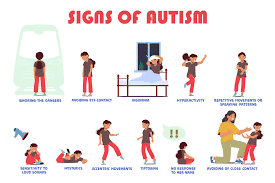
Parents and caregivers are often the first to notice developmental differences in young children. Some common early signs include:
– Limited eye contact or avoiding eye contact.
– Not responding to their name by 9-12 months.
– Lack of pointing at objects or showing interest by 14 months.
– Not engaging in pretend play by 18 months.
– Delayed speech or lack of babbling.
– Repetitive behaviors like hand flapping, rocking, or spinning.
– Strong reactions to certain sounds, textures, or tastes.
– Intense focus on specific items or topics.
These signs don’t definitively mean a child has autism, but they warrant further professional evaluation. A pediatrician can provide guidance on next steps and referrals.
Autism Explained: Traits in Adolescents and Adults
For individuals diagnosed later in life, or those who suspect they might be autistic, the signs can be more subtle or have been masked over years of adaptation. In adolescents and adults, traits might include:
– Difficulties with social cues, understanding sarcasm, or reading body language.
– Challenges forming and maintaining friendships, despite a desire for connection.
– Intense, focused interests (often called “special interests”) that may dominate conversations.
– Strict adherence to routines and significant distress when routines are disrupted.
– Sensory sensitivities (e.g., bothered by loud noises, bright lights, certain clothing textures).
– Repetitive movements or self-stimulatory behaviors (stimming) to regulate emotions.
– Literal interpretation of language.
– Challenges with executive functions like planning, organizing, and time management.
It’s important to recognize that many adults discover their autism diagnosis much later, often after years of feeling “different” or struggling in various social or professional settings. A diagnosis can bring clarity and help them understand themselves better.
Exploring Potential Causes and Contributing Factors
The exact causes of autism are still being researched, but current scientific consensus points to a complex interplay of genetic and environmental factors. It’s crucial to understand that autism is not caused by vaccines, poor parenting, or lifestyle choices.
Research continues to uncover the intricate biological mechanisms that contribute to the development of ASD. This ongoing work aims to improve early identification and personalized support strategies.
Genetic Influences
Genetics play a significant role in autism. Studies have identified numerous genes associated with an increased risk of ASD. These genes can affect brain development, the formation of neural connections, and the way brain cells communicate.
It’s not usually one single gene, but rather a combination of many genes, some common and some rare, that contribute to an individual’s susceptibility. In some cases, genetic mutations can occur spontaneously, meaning they are not inherited from parents.
Environmental Factors
While genetics are a primary driver, environmental factors are also thought to contribute, often by interacting with genetic predispositions. These are typically factors occurring during prenatal or perinatal development.
Potential environmental factors include:
– Advanced parental age at conception.
– Maternal illness during pregnancy (e.g., certain infections).
– Exposure to certain medications during pregnancy.
– Complications during birth, such as oxygen deprivation.
– Low birth weight or prematurity.
It’s important to note that these factors increase risk and are not direct causes. Most individuals exposed to these factors do not develop autism, reinforcing the idea of a complex multifactorial origin.
Neurological Differences
Research using brain imaging and post-mortem studies has revealed structural and functional differences in the brains of autistic individuals. These differences can include variations in brain size, neural connectivity patterns, and the functioning of neurotransmitters.
For example, some studies suggest differences in the amygdala (involved in emotion processing) and the prefrontal cortex (involved in executive functions). These neurological distinctions help explain some of the characteristic traits of autism.
Navigating Life with Autism: Challenges and Strengths
Living with autism presents a unique set of challenges and, equally, a remarkable array of strengths. Recognizing both aspects is essential for fostering a balanced perspective and providing effective support. Life with autism explained in this context highlights the individuality of each person’s journey.
Understanding these facets helps create environments where autistic individuals can thrive and contribute their unique talents to society.
Common Challenges Faced by Autistic Individuals
The challenges associated with autism primarily revolve around social communication, sensory processing, and executive functions. These can impact daily life in various ways:
– Social Communication Difficulties: Autistic individuals may struggle with understanding unspoken social rules, interpreting facial expressions, or maintaining reciprocal conversations. This can lead to feelings of isolation or misunderstanding.
– Sensory Sensitivities: Many autistic people experience hypersensitivity or hyposensitivity to sensory input (e.g., loud noises, bright lights, certain textures, strong smells). These can be overwhelming and lead to meltdowns or shutdowns.
– Executive Functioning Issues: Difficulties with planning, organizing tasks, managing time, and shifting attention can affect academic performance, employment, and independent living skills.
– Emotional Regulation: Challenges in identifying, understanding, and managing emotions (alexithymia) can lead to heightened anxiety, frustration, or difficulty coping with stress.
These challenges are not indicative of a lack of intelligence or desire, but rather different ways of processing and interacting with the world.
Unique Strengths and Abilities
Despite the challenges, autistic individuals often possess distinct strengths that are highly valuable. These strengths should be recognized, nurtured, and leveraged:
– Attention to Detail: Many autistic people have an exceptional ability to notice details and patterns that others might miss, making them highly skilled in fields requiring precision and analytical thinking.
– Deep Focus and Special Interests: The capacity for intense, sustained focus on topics of interest can lead to expertise and innovative contributions in specialized areas.
– Honesty and Directness: Autistic individuals are often perceived as highly honest, direct, and less inclined to engage in social games or manipulation, fostering trust and clear communication.
– Strong Memory: Some individuals with autism demonstrate remarkable rote memory skills, particularly for facts, figures, or specific information related to their interests.
– Logic and Problem-Solving: A preference for logical, systematic thinking can make autistic individuals excellent problem-solvers, especially in fields like science, technology, engineering, and mathematics.
Embracing these strengths allows autistic individuals to flourish and contribute meaningfully to their communities and professions. It’s about finding the right fit, rather than forcing conformity.
Support, Therapies, and Assistive Technologies in 2025
The landscape of support for autism has expanded significantly, offering a range of therapies, educational strategies, and technological aids designed to enhance the lives of autistic individuals. The goal is to maximize independence, improve communication, and support overall well-being.
Personalized approaches are key, recognizing that what works for one person may not work for another. A multidisciplinary team often provides the most comprehensive support.
Therapeutic and Educational Interventions
Various therapies are available to address specific areas of development and functioning:
– Applied Behavior Analysis (ABA): One of the most common therapies, ABA focuses on teaching specific skills and reducing challenging behaviors through positive reinforcement. Its modern applications emphasize individual needs and ethical practice.
– Speech and Language Therapy: Helps improve communication skills, including verbal and non-verbal communication, understanding social cues, and engaging in reciprocal conversations.
– Occupational Therapy (OT): Addresses sensory sensitivities, fine motor skills, gross motor skills, and daily living activities like dressing, eating, and hygiene, to promote independence.
– Social Skills Training: Teaches strategies for navigating social interactions, understanding social norms, and building relationships in structured environments.
– Floortime (Developmental, Individual-difference, Relationship-based – DIR): Focuses on meeting the child where they are developmentally and building upon their natural interests to foster emotional and intellectual growth through playful interaction.
Early intervention is consistently highlighted as beneficial, as it can help shape brain development during critical periods, leading to improved outcomes.
Assistive Technologies for Enhanced Living
Technology plays an increasingly vital role in supporting autistic individuals in 2025. These tools can aid in communication, organization, sensory regulation, and learning.
Here’s a look at some common assistive technologies:
Comparison of Top Assistive Technologies
| Product Category | Price Range | Pros | Cons | Best For |
|---|---|---|---|---|
| AAC Communication Apps | $50 – $300 (one-time) | Customizable symbols/voices, portable, promotes verbal development. | Can be expensive, requires device access, learning curve for user/parent. | Non-verbal or minimally verbal individuals seeking expressive communication. |
| Visual Schedule Apps | Free – $20/month (subscription) | Helps with routine, transitions, time management, reduces anxiety. | Requires consistent input, less flexible for spontaneous changes. | Individuals needing structure and visual prompts for daily activities. |
| Noise-Canceling Headphones | $30 – $350 | Reduces sensory overload, improves focus in noisy environments, portable. | May cause discomfort for some, can block important sounds, battery life dependent. | Individuals with auditory sensitivities who need quiet spaces. |
| Sensory Input Devices | $20 – $200 (weighted blankets, fidget toys) | Provides calming sensory input, helps regulate emotions, promotes focus. | Effectiveness varies by individual, some items can be bulky, requires trial-and-error. | Individuals seeking sensory regulation and self-soothing tools. |
| Smart Home Assistants | $30 – $150 (device only) | Voice-controlled routines, reminders, information access, promotes independence. | Privacy concerns, requires internet, may not understand all voice commands. | Individuals benefiting from automated assistance and verbal prompts. |
These technologies are constantly evolving, becoming more intuitive and integrated into daily life, providing powerful tools for individuals to navigate their world more effectively and independently.
Fostering Inclusion and Acceptance for Autistic Individuals
Beyond individual therapies and technological aids, true progress in supporting autistic individuals lies in fostering a society that embraces inclusion and acceptance. This means moving beyond mere tolerance to genuine understanding and valuing neurodiversity. Autism Explained often leads to greater empathy and a desire for community-wide change.
Creating inclusive environments benefits everyone, allowing diverse perspectives to enrich our shared experiences and drive innovation.
The Neurodiversity Movement
The neurodiversity movement advocates for viewing autism and other neurological conditions as natural variations of the human brain, rather than purely deficits. It emphasizes celebrating differences and designing environments that accommodate diverse needs and strengths.
This perspective calls for societal adjustments in education, employment, and public spaces to be more accessible and welcoming for autistic individuals, promoting their self-advocacy and agency.
Promoting Understanding and Empathy
Education is a powerful tool in fostering acceptance. Campaigns that share authentic stories and perspectives of autistic individuals can break down stereotypes and build bridges of understanding. Training for educators, employers, and healthcare professionals is also crucial.
Encouraging neurotypical individuals to learn about and appreciate neurodiverse ways of thinking and interacting helps create a more compassionate and inclusive world for all.
Creating Inclusive Environments
Practical steps to foster inclusion include:
– Sensory-Friendly Spaces: Designing public areas, schools, and workplaces with reduced sensory input (e.g., quiet rooms, muted lighting, clear pathways) can make them more accessible.
– Flexible Communication: Offering various communication methods (visual aids, written instructions, direct language) to accommodate different processing styles.
– Employment Opportunities: Implementing inclusive hiring practices, providing job coaching, and offering workplace accommodations to leverage the unique talents of autistic employees.
– Educational Accommodations: Providing individualized education plans (IEPs), sensory breaks, and supportive learning environments tailored to students’ needs.
– Community Engagement: Creating opportunities for autistic individuals to participate in social, recreational, and cultural activities in ways that feel comfortable and supportive.
By actively working towards these goals, we can ensure that autistic individuals not only feel accepted but are empowered to contribute their unique gifts to society.
As we continue to gain a deeper understanding of autism spectrum disorder, our ability to provide effective support and foster a truly inclusive world grows. From recognizing early signs to leveraging assistive technologies and advocating for neurodiversity, the journey of Autism Explained is one of continuous learning and compassion. Embracing the full spectrum of human experience enriches us all.
For more insights or collaboration opportunities, visit www.agentcircle.ai.
Frequently Asked Questions (FAQ)
How common is autism?
According to the CDC, approximately 1 in 36 children in the United States are identified with Autism Spectrum Disorder. Prevalence rates vary globally but show a general upward trend due to increased awareness and improved diagnostic methods.
Can autism be cured?
Autism is a lifelong neurodevelopmental condition, not a disease that can be “cured.” Instead, therapies, support strategies, and accommodations aim to help autistic individuals develop skills, manage challenges, and thrive in their daily lives. The focus is on acceptance and support, not eradication.
What are the earliest signs of autism?
Early signs can appear by 12-18 months of age and include limited eye contact, not responding to one’s name, lack of pointing or showing objects, delayed speech, and repetitive behaviors like hand flapping. If you notice these signs, consult a pediatrician for evaluation.
Is there a connection between vaccines and autism?
No. Extensive scientific research has definitively shown that there is no link between vaccines and autism. Numerous large-scale studies have debunked this myth, and major health organizations worldwide affirm vaccine safety.
What is neurodiversity?
Neurodiversity is a concept that views neurological differences, such as autism, ADHD, and dyslexia, as natural and valuable variations in the human brain. It promotes the idea that there is no “normal” brain and advocates for celebrating these differences rather than pathologizing them.