
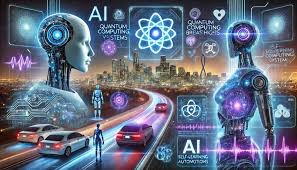
Meta Description: Get ready for 2025! Discover how AI will transform industries, careers, and daily life. Explore key game changers and prepare for the AI future.
The world stands on the cusp of an unparalleled technological revolution, with artificial intelligence leading the charge. What felt like science fiction just a few years ago is now becoming our daily reality, and 2025 is poised to be a pivotal year in this evolution. Preparing for the AI future isn’t just about understanding technology; it’s about anticipating shifts in every aspect of life, from how we work to how we live.
The advancements are coming so rapidly that staying informed is crucial for individuals and businesses alike. As AI integrates more deeply into our societal fabric, it promises to redefine efficiency, innovation, and human potential. Let’s delve into the game-changing trends and developments that will shape our world by 2025.
AI’s Ubiquitous Presence: Transforming Industries
By 2025, AI will no longer be an emerging technology but a foundational layer across nearly every industry. Its ability to process vast amounts of data, identify patterns, and automate complex tasks is driving unprecedented efficiency and innovation. This pervasive integration will reshape business models and operational strategies.
Healthcare Reimagined with AI
In healthcare, AI is already making significant strides, but 2025 will see even more dramatic impacts. Diagnostic tools powered by AI will achieve new levels of accuracy, assisting doctors in early disease detection for conditions like cancer and Alzheimer’s. Personalized medicine will become more common, with AI analyzing individual genetic data and health records to tailor treatments.
Beyond diagnostics, AI will streamline administrative tasks, reducing burnout for medical professionals. Robotic process automation (RPA) will handle appointment scheduling, billing, and record management, allowing healthcare providers to focus more on patient care. The AI future in healthcare promises a more efficient, precise, and patient-centric system.
- – AI-powered image analysis for faster and more accurate disease detection.
- – Predictive analytics to forecast outbreaks and manage public health crises.
- – Drug discovery accelerated through AI’s ability to simulate molecular interactions.
- – Personalized treatment plans based on comprehensive patient data.
AI in Finance: Precision and Protection
The financial sector is another area where AI is rapidly becoming indispensable. Fraud detection systems are becoming more sophisticated, using machine learning to identify anomalous transactions in real-time. This helps protect consumers and institutions from billions in potential losses.
Algorithmic trading will continue to evolve, with AI making market predictions and executing trades at speeds impossible for humans. Personalized financial advice, once a luxury, will become accessible to more people through AI-driven platforms that analyze spending habits and financial goals. This enhances both security and accessibility in the financial AI future.
Manufacturing and Logistics: The Smart Supply Chain
AI is central to the concept of Industry 4.0, where smart factories use connected machines and AI to optimize production. Predictive maintenance, powered by AI, anticipates equipment failures before they happen, drastically reducing downtime and maintenance costs. Robotic automation will handle more complex assembly and quality control tasks.
In logistics, AI optimizes routes, manages inventory, and even predicts demand fluctuations. This leads to more resilient and efficient supply chains, capable of adapting to global disruptions. By 2025, the AI future will see manufacturing and logistics operating with unprecedented levels of precision and responsiveness.
The Evolving Landscape of Work: Skills for the AI Future
The integration of AI into workplaces inevitably raises questions about the future of jobs. Rather than outright replacement, the prevailing trend indicates a shift towards job augmentation, where AI tools assist humans, making them more productive and efficient. However, this also means a transformation in the skills required for success.
Augmentation, Not Just Automation
Many routine and repetitive tasks will be automated by AI, freeing human workers to focus on more complex, creative, and strategic endeavors. For example, in customer service, AI chatbots will handle common queries, escalating intricate problems to human agents. This allows human agents to dedicate their expertise to resolving more challenging issues.
In fields like content creation and software development, AI acts as a powerful co-pilot, generating initial drafts, debugging code, or suggesting improvements. This collaborative model between humans and AI will define many roles in the coming years. The true AI future involves intelligent collaboration.
Essential Skills for a New Era
To thrive in an AI-driven economy, individuals will need to cultivate a specific set of skills that complement AI capabilities. These are often referred to as “human-centric” skills, as they leverage abilities unique to human intelligence.
– **Critical Thinking and Problem-Solving:** As AI provides data and analysis, humans will be responsible for interpreting it, identifying nuanced problems, and devising creative solutions. AI can process, but humans infer and innovate.
– **Creativity and Innovation:** AI can generate novel ideas based on existing data, but genuine, disruptive innovation still requires human imagination and intuition. This includes artistic endeavors, product design, and strategic thinking.
– **Emotional Intelligence and Communication:** Roles requiring empathy, negotiation, persuasion, and complex interpersonal interactions will remain firmly in the human domain. AI lacks the capacity for true emotional understanding.
– **AI Literacy and Prompt Engineering:** Understanding how AI works, its capabilities, and its limitations will be crucial. The ability to effectively “prompt” AI tools to get the desired output will become a highly valued skill across many professions.
– **Adaptability and Lifelong Learning:** The pace of technological change demands a mindset of continuous learning. Workers must be willing to adapt to new tools, learn new skills, and embrace evolving job descriptions.
Investing in these skills now will be paramount for navigating the workforce changes by 2025. Businesses will also need to prioritize upskilling and reskilling their employees to stay competitive in the dynamic AI future.
Everyday AI: Smart Living and Personalization
AI’s influence isn’t limited to boardrooms and factories; it’s increasingly woven into the fabric of our daily lives, making our homes smarter, our experiences more personalized, and our interactions more intuitive. By 2025, everyday AI will be seamless and often invisible, working behind the scenes to enhance convenience and comfort.
The Intelligent Home: Beyond Smart Devices
Smart homes will evolve from collections of connected gadgets to truly intelligent ecosystems. AI-powered central hubs will learn your habits, anticipating your needs before you express them. Imagine your home adjusting lighting, temperature, and even entertainment based on your daily schedule, presence, and preferences.
Security systems will utilize AI for advanced facial recognition and anomaly detection, differentiating between household members and potential threats. Kitchen appliances will offer personalized meal suggestions based on your diet, available ingredients, and even your mood. The AI future in homes is about predictive, proactive living.
Personalized Experiences on Steroids
Beyond the home, AI will refine personalized experiences across all digital touchpoints. From entertainment platforms that know exactly what show or music you’ll love next, to e-commerce sites that present products you genuinely need, AI will anticipate desires. Travel planning will become hyper-personalized, with AI crafting itineraries based on your interests, budget, and past trips.
Voice assistants will become even more sophisticated, understanding nuanced commands and carrying out multi-step requests. They will integrate more deeply with all your devices and services, acting as your personal digital concierge. These advancements ensure that the AI future makes our digital interactions smoother and more relevant.
Navigating the Smart Gadget Landscape
With so many AI-powered gadgets entering the market, choosing the right ones can be challenging. Here’s a comparison of some popular categories that are likely to see significant advancements by 2025, shaping your daily AI future.
| Product | Price | Pros | Cons | Best For |
|---|---|---|---|---|
| Smart Display (e.g., Google Nest Hub Max) | $229 | Integrated camera for video calls, excellent smart home control, vivid screen for media. | Privacy concerns with constant camera/mic, screen size can be limited for some uses. | Kitchens, communal areas; users wanting visual smart home control and video communication. |
| AI-Powered Robot Vacuum (e.g., iRobot Roomba s9+) | $999 | Advanced mapping and navigation, self-emptying base, effective on various floor types. | High initial cost, maintenance of filters and brushes, can sometimes get stuck on small items. | Busy individuals or families with pets, large homes, and those prioritizing convenience. |
| Personal AI Translator Device (e.g., Pocketalk Plus) | $299 | Supports many languages, real-time two-way translation, easy to use interface. | Requires internet connection for best performance, battery life can be a factor during long trips. | Frequent international travelers, business professionals with global contacts, language learners. |
| Smart Sleep Tracker (e.g., Oura Ring Gen3) | $349 | Accurate sleep stage tracking, heart rate, temperature, activity monitoring, comfortable. | Subscription required for full features, not suitable for all finger sizes, screen-free. | Health-conscious individuals focusing on sleep optimization, recovery, and overall wellness. |
Ethical AI and Governance: Building a Responsible AI Future
As AI’s capabilities expand, so does the imperative to address its ethical implications. The development and deployment of AI must be guided by principles that prioritize fairness, transparency, accountability, and privacy. Ensuring a responsible AI future is a collective global challenge.
Addressing Bias and Fairness
One of the most critical ethical concerns revolves around AI bias. If AI systems are trained on biased data, they will perpetuate and even amplify existing societal inequalities. This can lead to unfair outcomes in areas like hiring, credit scoring, or criminal justice. Developers and policymakers are working to identify and mitigate these biases through diverse datasets and rigorous testing.
Ensuring fairness requires a multi-faceted approach, including diverse teams developing AI, transparent data collection practices, and constant auditing of AI’s decision-making processes. The goal is to create AI that serves all segments of society equitably.
Privacy and Data Security
AI systems thrive on data, making data privacy a paramount concern. The vast amounts of personal information collected and processed by AI raise questions about consent, data ownership, and potential misuse. Robust data governance frameworks, like GDPR, are becoming more crucial, and new regulations specifically for AI are emerging.
By 2025, we will see stronger emphasis on privacy-preserving AI techniques, such as federated learning, which allows AI models to learn from decentralized data without direct access to sensitive information. Encrypted AI and other privacy-enhancing technologies will be key to building trust in the AI future.
Transparency and Accountability
The “black box” nature of some advanced AI models, where their decision-making processes are opaque, presents challenges for accountability. When AI makes critical decisions, understanding how it arrived at a particular conclusion is essential, especially in high-stakes applications like autonomous vehicles or medical diagnostics.
The push for Explainable AI (XAI) aims to make AI systems more understandable and transparent to humans. This will be vital for building public trust and ensuring that when AI makes mistakes, we can identify the cause and implement corrective measures. Establishing clear lines of accountability for AI-driven decisions is an ongoing legislative and ethical challenge for the AI future.
Investing in the AI Future: Opportunities and Challenges
The burgeoning field of AI presents immense opportunities for investment, innovation, and economic growth. However, it also comes with its own set of challenges that need careful navigation. Understanding both sides of the coin is crucial for individuals and businesses looking to capitalize on this transformative technology.
Growth Areas and Investment Hotbeds
Venture capital and corporate investment are pouring into AI startups and R&D divisions. Key growth areas include:
– **Generative AI:** Tools that create new content (text, images, code, video) are seeing explosive growth and significant investment.
– **Edge AI:** Processing AI on devices themselves rather than in the cloud, offering faster response times and enhanced privacy, crucial for IoT devices and autonomous systems.
– **AI in Biotechnology:** Applying AI to drug discovery, personalized medicine, and genetic engineering offers revolutionary potential.
– **Cybersecurity AI:** Using AI to detect and combat sophisticated cyber threats, an ever-growing necessity.
– **AI Infrastructure:** Companies providing the specialized hardware (GPUs, TPUs) and software platforms necessary to build and run AI models.
These sectors represent significant opportunities for investors and innovators looking to shape the next wave of technological advancement. The rapid development in these areas will define much of the AI future.
Navigating the Challenges
Despite the immense potential, the AI landscape is not without its hurdles. One major challenge is the “talent gap,” a shortage of skilled AI engineers, data scientists, and ethicists to meet the demand. This drives up competition for talent and can slow development.
Another challenge is the high computational cost of training and running large AI models, which can be energy-intensive and expensive. Regulatory uncertainty also poses a challenge, as governments worldwide grapple with how to legislate a rapidly evolving technology without stifling innovation. Balancing these factors will be key to unlocking the full potential of the AI future.
The journey towards 2025 promises to be one of profound transformation, driven by the relentless progress of artificial intelligence. From revolutionizing industries and reshaping the workforce to embedding intelligence into our daily lives and challenging our ethical frameworks, AI will continue to be a dominant force. Preparing for this future means understanding its potential, adapting to new skill demands, and actively participating in the conversation about responsible AI development. The game changers are here, and how we respond will determine the landscape of the coming years.
For more insights or collaboration opportunities, visit www.agentcircle.ai.
Frequently Asked Questions (FAQ)
How will AI impact my job by 2025?
By 2025, AI is expected to augment many jobs rather than completely replace them. Routine and repetitive tasks will be increasingly automated, allowing human workers to focus on more complex, creative, and strategic activities. The key is to develop skills that complement AI, such as critical thinking, creativity, emotional intelligence, and AI literacy.
Is AI going to make decisions without human input?
While AI can make highly informed decisions based on data, especially in automated systems, human oversight will remain crucial, particularly for high-stakes scenarios. The trend is towards “human-in-the-loop” or “human-on-the-loop” systems, where humans monitor, validate, and intervene when necessary. Ethical guidelines and regulations are being developed to ensure accountability and control.
How can I prepare myself or my business for the AI future?
For individuals, focus on acquiring human-centric skills (creativity, critical thinking, emotional intelligence) and AI literacy. For businesses, invest in AI education for employees, explore AI tools that can augment operations, and develop a strategy for integrating AI responsibly and ethically. Prioritize data governance and cybersecurity measures.
What are the biggest ethical concerns regarding AI in 2025?
The biggest ethical concerns include AI bias (perpetuating societal inequalities), data privacy (misuse of personal information), transparency (understanding how AI makes decisions), and accountability (who is responsible when AI makes mistakes). Efforts are underway globally to establish regulations and ethical frameworks to address these issues and ensure responsible AI development.