
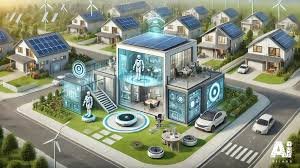
Meta Description: Discover the future of your smart home in 2025! Explore advanced AI, enhanced security, sustainable tech, and seamless integration for a truly connected living experience.
The Dawn of Intelligent Living: Predictive Automation and AI
Imagine a home that doesn’t just respond to commands, but anticipates your needs. Today’s smart home technology, while impressive, often requires active input. In 2025, the evolution of AI and machine learning will transform the smart home into a truly intuitive living space, moving beyond simple automation to predictive intelligence.
This leap means your home will learn your routines, preferences, and even your mood, adjusting environmental settings proactively. Artificial intelligence will be the brain of your smart home, processing vast amounts of data from interconnected devices to create a truly seamless and personalized living experience.
Advanced AI-Powered Personalization
Future smart home systems will integrate AI to create hyper-personalized environments. These systems will observe patterns in your daily life, such as when you wake up, leave for work, or relax in the evening, and optimize settings accordingly.
For example, your smart thermostat will not only learn your preferred temperature ranges but also correlate them with external weather patterns, time of day, and even your individual presence in a room, reducing energy waste and maximizing comfort. Lighting will adapt dynamically, adjusting brightness and color temperature to support your circadian rhythm throughout the day.
Proactive Maintenance and Diagnostics
One of the most significant advancements will be the ability of your smart home to monitor its own health and even pre-empt issues. AI-driven diagnostics will keep an eye on appliances, plumbing, and electrical systems.
Imagine your smart washing machine detecting a potential motor issue before it fails and automatically scheduling a service appointment, or your HVAC system identifying an inefficient filter and ordering a replacement. This proactive approach saves time, money, and reduces stress, ensuring your home runs smoothly.
Enhanced Security and Privacy in the Smart Home Ecosystem
As the number of interconnected devices in your smart home grows, so does the importance of robust security and privacy protocols. By 2025, these concerns will be central to smart home design, with advanced solutions safeguarding both your physical property and your personal data.
The focus will shift from merely preventing intrusions to creating a comprehensive, multi-layered security framework that adapts to evolving threats. Your future smart home will act as a vigilant, intelligent guardian.
Next-Generation Biometric and Behavioral Authentication
Traditional passwords and PINs are giving way to more sophisticated authentication methods. In 2025, biometric recognition will be standard, incorporating facial recognition, fingerprint scanning, and even voice authentication for secure access to your home and its various functions.
Furthermore, behavioral authentication, where the system recognizes your unique patterns of movement or device interaction, will add another layer of security. This means your smart home will know if it’s truly you operating the system, not just someone with your credentials.
Decentralized Data and Edge Computing for Privacy
Privacy concerns surrounding data collection are paramount. Future smart home systems will increasingly leverage decentralized data storage and edge computing. This means more data processing will occur directly on your devices, rather than being sent to a central cloud server.
This approach significantly reduces the risk of data breaches and gives users more control over their personal information. Data that needs to be shared will be heavily encrypted, with transparent policies outlining how it’s used, empowering homeowners to make informed choices about their privacy.
Integrated Threat Detection and Response
Security will move beyond simple alarm systems. Your smart home will feature integrated threat detection, capable of identifying unusual activities—from an unfamiliar face at the door to anomalous energy consumption indicating a potential electrical issue. Systems will be able to differentiate between legitimate household activity and genuine threats.
Automated responses will be highly sophisticated, including activating multi-room lighting, triggering deterrent sounds, alerting authorities, and even locking specific doors. The entire security apparatus will work in concert to protect your home and loved ones.
Sustainable Living: Energy Efficiency and Resource Management
With a growing global emphasis on sustainability, your smart home in 2025 will play a crucial role in reducing your environmental footprint. Integration of smart technology will not only conserve energy but also manage water, waste, and even food resources more effectively, leading to a truly eco-conscious lifestyle.
This transformation will see homes actively contributing to a greener planet, providing insights and automation that empower residents to make sustainable choices without sacrificing comfort or convenience.
Intelligent Energy Optimization
Energy management will go far beyond smart thermostats. Future smart homes will feature comprehensive energy dashboards that provide real-time consumption data for every appliance. AI will analyze this data, identify energy hogs, and suggest optimization strategies.
The system might automatically shift high-consumption tasks, like running the dishwasher or charging an electric vehicle, to off-peak hours when electricity is cheaper and often cleaner. Integration with solar panels and home battery storage will be seamless, ensuring maximum self-sufficiency and minimal grid reliance.
– Smart grid integration for demand response programs.
– Predictive analytics for heating and cooling based on weather forecasts.
– Automated appliance shutdown for unused devices.
Smart Water Management
Water conservation will be another key aspect. Smart irrigation systems will use hyper-local weather data and soil moisture sensors to water your garden only when necessary, avoiding waste. Inside the home, smart leak detection systems will not only alert you to issues but can also automatically shut off water supplies to prevent costly damage.
Even your shower might become smart, tracking water usage and providing real-time feedback to encourage more mindful consumption. These subtle yet powerful interventions will make significant strides in reducing household water waste.
Waste and Recycling Automation
While still emerging, smart waste management solutions will become more prevalent. Intelligent bins might sort recyclables automatically or compact waste to reduce volume. Some visionary concepts even include composting systems that integrate with kitchen waste. These innovations aim to streamline the recycling process and reduce landfill contributions.
Health and Wellness: A Proactive Approach to Wellbeing
Your smart home in 2025 will be more than just a place to live; it will be an active partner in maintaining and improving your health and wellness. From monitoring vital signs to optimizing your sleep environment, technology will create a restorative and health-promoting atmosphere.
This holistic approach will bring preventative care and well-being directly into your daily routine, making healthy living an effortless part of your smart home experience.
Integrated Environmental Monitoring
Air quality monitors will become standard, tracking pollutants, allergens, and VOCs, with the system automatically activating air purifiers or ventilation when needed. Humidity sensors will work with humidifiers and dehumidifiers to maintain optimal levels, reducing respiratory issues and promoting overall comfort.
Light will also be a critical factor, with tunable lighting systems adjusting color temperature and intensity throughout the day to support natural circadian rhythms, improving sleep quality and daytime alertness. This nuanced control over your immediate environment profoundly impacts wellbeing.
Sleep Optimization
Beyond lighting, smart beds and sleep trackers will provide detailed insights into your sleep patterns, offering personalized recommendations. Your smart home will integrate this data, automatically adjusting the thermostat, turning off lights, and even playing calming sounds to create the ideal sleep sanctuary. Imagine waking gently to simulated natural light and a perfectly brewed coffee.
Remote Health Monitoring and Assistance
For seniors or those with chronic conditions, the smart home will offer invaluable support. Wearable devices will seamlessly integrate with home systems, monitoring vital signs and activity levels. In case of a fall or a significant change in health metrics, the system can automatically alert family members or emergency services.
Voice-activated assistants will provide medication reminders and access to telehealth services, ensuring individuals can maintain independence longer while having access to immediate support when needed. This transforms the smart home into a truly caring environment.
Seamless Interoperability and the Unified Smart Home
One of the biggest hurdles in today’s smart home market is the fragmentation of devices and platforms. In 2025, the industry will have largely overcome these challenges, moving towards true interoperability where devices from different manufacturers communicate and cooperate effortlessly, creating a truly unified smart home experience.
This evolution is critical for mass adoption and for unlocking the full potential of connected living, ensuring that your devices work together harmoniously, regardless of brand.
Universal Standards and Protocols
The adoption of universal communication standards like Matter will be widespread, enabling a truly plug-and-play experience. This means you won’t need to worry about compatibility issues when buying new devices; everything will simply work together, out of the box. This simplifies setup and expands the possibilities for complex automation routines.
Open APIs and robust developer ecosystems will also foster innovation, allowing new applications and services to integrate seamlessly with your existing smart home setup, constantly enhancing its capabilities.
Centralized Control with Contextual Intelligence
While voice assistants and apps remain crucial, the control of your smart home will become more contextual and less reliant on explicit commands. AI will interpret your presence, time of day, and even external events (like weather changes) to execute routines without you having to ask.
Physical smart panels and intuitive interfaces will also evolve, offering a visual overview of your home’s status and allowing for quick, intelligent adjustments. The goal is to make interaction feel natural and unobtrusive.
Comparison of Leading Smart Home Hubs in 2025
Comparison of Top Smart Home Hubs
| Product | Price | Pros | Cons | Best For |
|---|---|---|---|---|
| Dax Central Hub Pro (Gen 3) | $349 | Deep AI learning, exceptional interoperability (Matter/Thread), robust security. | Premium price point, requires professional setup for advanced features. | Tech-savvy users, comprehensive ecosystem builders, high-security focus. |
| Google Nest Hub Max 2 | $279 | Integrated display, excellent Google Assistant integration, strong media capabilities. | Privacy concerns for some users, less robust local processing compared to competitors. | Families, media enthusiasts, Google ecosystem users. |
| Aeotec Smart Hub (Zigbee & Z-Wave) | $199 | Wide device compatibility (Zigbee, Z-Wave), strong local control, flexible automation. | User interface can be less intuitive for beginners, limited voice assistant integration. | DIY enthusiasts, those with diverse legacy smart devices. |
| Apple HomePod Mini 2 | $119 | Seamless Apple ecosystem integration, excellent sound, compact design, strong privacy. | Limited device compatibility outside Apple HomeKit, less customizability. | Apple users, those prioritizing simplicity and privacy, HomeKit enthusiasts. |
Overcoming Challenges: A Roadmap to Your Future Smart Home
While the vision of a fully integrated smart home in 2025 is exciting, several challenges must be addressed for widespread adoption and optimal functionality. These include concerns about data privacy, cybersecurity, the digital divide, and the complexity of initial setup and maintenance.
Manufacturers, policymakers, and consumers all have a role to play in building a future where smart homes are secure, accessible, and truly beneficial for everyone. Navigating these obstacles is key to realizing the full potential of seamless living.
Addressing Cybersecurity and Data Privacy
As smart homes become more sophisticated, they also present a larger attack surface for cyber threats. Continuous development of advanced encryption, secure authentication protocols, and regular software updates will be essential. Users will need to be educated on best practices for securing their networks and devices.
Transparency from manufacturers regarding data collection and usage policies will build trust. Regulations that protect consumer data, similar to GDPR, will likely expand to cover smart home devices more comprehensively, ensuring user rights are upheld.
Ensuring Accessibility and Affordability
The promise of the smart home should be accessible to all, not just a select few. Efforts to reduce the cost of entry, through more affordable devices and flexible subscription models, are vital. Simplifying installation and configuration will also lower barriers for non-technical users.
Furthermore, designing smart home interfaces that cater to individuals with disabilities, offering multiple control methods (voice, touch, gesture), will ensure that smart living benefits a broader demographic, truly enhancing quality of life for everyone.
Reliability and Energy Consumption of Smart Devices
The reliance on internet connectivity for many smart devices can be a point of failure. Future smart homes will increasingly incorporate local processing capabilities and robust mesh networking to ensure critical functions operate even during internet outages. This local processing also contributes to privacy and speed.
While smart devices aim for energy efficiency, the sheer number of devices could lead to increased overall energy consumption. Manufacturers will focus on ultra-low power consumption for individual devices, alongside intelligent energy management systems, to prevent this.
The journey to a truly intelligent and seamless smart home is rapidly progressing. By 2025, our living spaces will be more intuitive, secure, sustainable, and health-focused than ever before. These advancements promise to simplify daily life, reduce our environmental impact, and enhance our overall well-being. Embracing these technologies means stepping into a future where our homes actively support and anticipate our needs.
As you consider upgrading your living space, explore the possibilities that next-generation smart home technology offers. Stay informed about new product releases and evolving standards to build a home that’s ready for the future. The time to think about your smart home in 2025 is now.
For more insights or collaboration opportunities, visit www.agentcircle.ai.
Frequently Asked Questions (FAQ)
What is the biggest change expected for smart homes by 2025?
The most significant change is the shift from reactive automation to proactive, AI-driven predictive intelligence. Homes will anticipate your needs, learning routines and preferences to adjust settings without direct commands.
How will smart homes improve security and privacy?
Security will feature advanced biometrics, behavioral authentication, and integrated threat detection with automated responses. Privacy will be enhanced through decentralized data processing, edge computing, and transparent data usage policies.
Can a smart home really help with sustainability?
Absolutely. Future smart homes will offer intelligent energy optimization, smart water management systems (with leak detection and efficient irrigation), and even initial forms of waste and recycling automation to significantly reduce your environmental footprint.
Will all smart home devices work together seamlessly by 2025?
The industry is rapidly moving towards universal interoperability, largely driven by standards like Matter. This aims to ensure that devices from different manufacturers can communicate and cooperate effortlessly, creating a truly unified smart home experience.
Are smart homes safe from cyber-attacks?
While no system is 100% impervious, smart home cybersecurity will be significantly enhanced by 2025 through advanced encryption, secure authentication, local processing, and continuous software updates. User education and robust regulations will also play a crucial role in improving safety.